Trading basics
A BTC position is not always a BTC balance

At a glance
A fully paid BTC spot purchase adds BTC to an asset balance. Opening a USDT-settled BTC perpetual creates a contract position, not a BTC balance you can withdraw. Position quantity, notional value, margin and available assets are different fields.
On this page
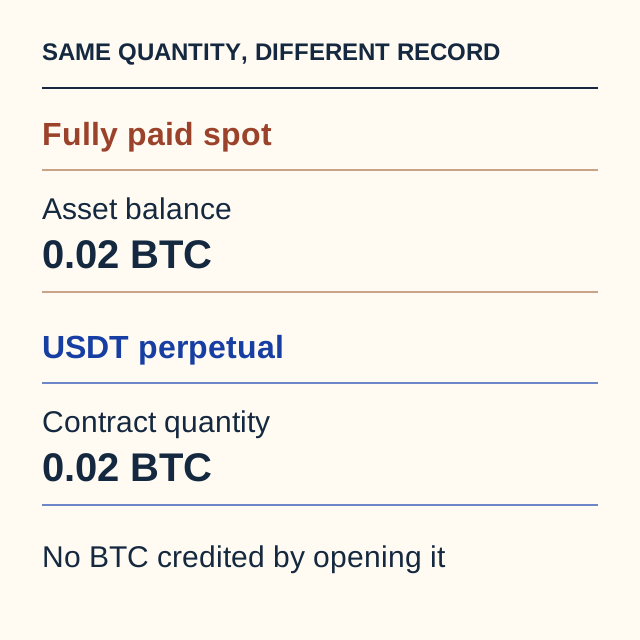
Two screens can both show 0.02 BTC and mean different things. Before comparing fees, identify whether the number describes an asset balance or the quantity of a contract.
This comparison covers fully paid spot buying and linear, USDT-settled BTC perpetuals. It excludes borrowed spot purchases, inverse contracts and special account arrangements.
Read the record, not just the ticker
Gemini's product explanation distinguishes an asset credited after a spot trade from a perpetual position. Gemini's settlement example uses GUSD; do not transfer that currency assumption to a USDT contract.
| Field | Fully paid spot | USDT perpetual |
|---|---|---|
| What is recorded? | BTC asset balance | Contract position |
| What does 0.02 describe? | BTC units bought | BTC-equivalent contract quantity |
| Can that quantity itself be withdrawn as BTC? | Check available BTC and withdrawal conditions | Opening the contract does not credit those BTC |
| What else must be checked? | Custody and transfer requirements | Collateral, settlement and margin rules |
Work through one price change
These are invented prices, not current quotes or a completed trade. Assume identical reference prices for both products, no fees or funding, an unchanged quantity and a contract position that remains open.
At 50,000 USDT per BTC, 0.02 × 50,000 = 1,000 USDT. For spot, that is the purchase amount before fees. For the perpetual, it is the entry notional, not the required margin.
At 45,000 USDT:
| Calculation | Result | Meaning |
|---|---|---|
| 0.02 × 45,000 | 900 USDT | Hypothetical value of the spot BTC |
| 0.02 × (45,000 − 50,000) | −100 USDT | Gross unrealized P&L of the long contract |
The spot quantity remains 0.02 BTC in this example; its quoted value falls. The contract's −100 USDT is a price-difference calculation, not a complete account balance or liquidation threshold. Bybit documents the linear P&L formula. Real spot and perpetual prices may differ.
Three questions before using either screen
- What could I transfer? Find the available asset balance, then check network, minimums, fees and restrictions. A BTC ticker or position notional is insufficient.
- What keeps the position open? No expiry does not remove margin requirements or liquidation risk; see Bybit's product comparison and our collateral boundaries guide.
- What costs are missing? Compare execution fees separately from funding and withdrawal costs. Our funding example explains holding costs; Bybit's fee overview identifies them separately.
An exchange asset balance also does not mean you control private keys. Read the custody responsibility map. This worksheet does not establish legal ownership rights, regional access or a product recommendation.
Editorial note: CoinFom created the example with AI-assisted research, writing, translation and review. No purchase, position or withdrawal was performed. Sources checked October 5, 2026. Educational information, not investment advice. CoinFom may earn referral commissions elsewhere; this article has no signup link. See About, editorial policy and corrections.