Crypto essentials
USDT and USDC: a dollar peg is not a dollar payout

At a glance
A dollar peg is a reference target, not a guarantee of the amount you receive. USDT and USDC conversion proceeds depend on the execution price, applicable costs and the route available to your account. Selling through an exchange and redeeming directly with an issuer have different requirements.
On this page
A balance of 100 dollar-linked tokens is not a promise that exactly US$100 will reach your bank account. The useful question is not just what a token aims to track, but how you would convert it and what you would receive.
USDT and USDC are often discussed as digital dollars. For a practical comparison, separate three things: the reference value, the price available on your platform and the net proceeds from your chosen route.
Three amounts, three meanings
- Reference value or peg: the value the stablecoin is designed to track.
- Execution price: what your particular sale actually receives per token.
- Net proceeds: what remains after the applicable conversion and withdrawal costs.
The Reserve Bank of Australia describes stablecoins as assets designed to maintain a value relative to a reference such as a national currency. Its 2022 analysis also explains reserve and redemption risks. That is a description of the mechanism, not an assessment that either token is safe today. RBA analysis.
Circle explicitly says USDC can trade above or below one dollar on third-party platforms. Its issuer redemption terms and a price offered by an exchange are therefore different things. Circle’s risk disclosure.
Selling and redeeming are different routes
Selling through an exchange means using that platform’s available market or conversion service. Direct redemption means requesting fiat currency from the issuer under its requirements. Owning a token alone does not tell you which route you can use.
- USDC: Circle’s product FAQ says Circle Mint is for institutions, not individuals or small businesses, and describes other access routes for those users. This is about Mint access; it is not a statement of every holder’s legal redemption rights. Circle’s FAQ.
- USDT: Tether’s redemption instructions require a verified Tether.to account and a minimum redemption amount, and direct users to its fee schedule. Check current eligibility and charges rather than assuming a small exchange balance can be redeemed directly. Tether’s instructions.
Before choosing a route, check whether your account can use it, the currency you will receive and the total quoted cost. A dollar-denominated amount is also different from the amount ultimately received in another currency.
A small example makes the distinction clear
Imagine selling 100 hypothetical dollar-linked tokens at US$0.99 each. The gross proceeds are US$99. If the only additional cost in this simplified example is a US$1 conversion fee, the result is US$98.
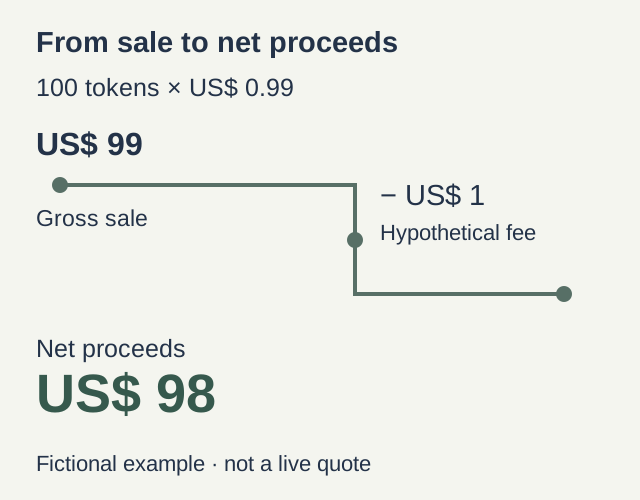
These inputs are invented for arithmetic, not a current USDT or USDC quote. A real route may include different charges. Do not subtract a spread twice if it is already reflected in your execution price.
What to check before converting
- Identify the exact asset and the route you intend to use.
- Read the executable quote and the amount shown as receivable, not just the portfolio estimate.
- Check applicable trading, conversion and withdrawal charges.
- If transferring first, verify the receiving platform’s asset and network instructions.
- Keep the completed transaction record so you can compare the estimate with the result.
CoinFom’s guides cover transfers and trading fees in more detail. A fee cashback offer concerns eligible fees; it should not be treated as protection against a token losing value or a platform becoming unavailable.
Educational information, not a recommendation to buy or hold either asset. Sources checked on September 24, 2026. Issuer conditions can change; use the current official terms for your account and region.